
A thermometer mounted on the barn wall displays 25°C. The producer adjusts ventilation accordingly. The cows, however, are panting. The air temperature reading provided a false sense of security. This scenario occurs regularly in dairy operations worldwide.
Air temperature represents only one component of thermal comfort. Humidity, air movement, and radiant heat combine to determine the actual conditions experienced by livestock. A control system that responds solely to temperature operates with incomplete information.
The Limitation of Single-Parameter Monitoring
Consider two environments: one at 25°C with 80% relative humidity, another at 30°C with 20% relative humidity. Most conventional controllers would identify the second scenario as more problematic due to the higher temperature reading. The physiological reality differs.
In the first environment, elevated humidity prevents evaporative cooling. Cattle rely heavily on moisture evaporation from respiratory surfaces and skin to regulate body temperature. When ambient humidity approaches saturation, this mechanism fails. The animal experiences significant thermal stress despite the moderate temperature reading.
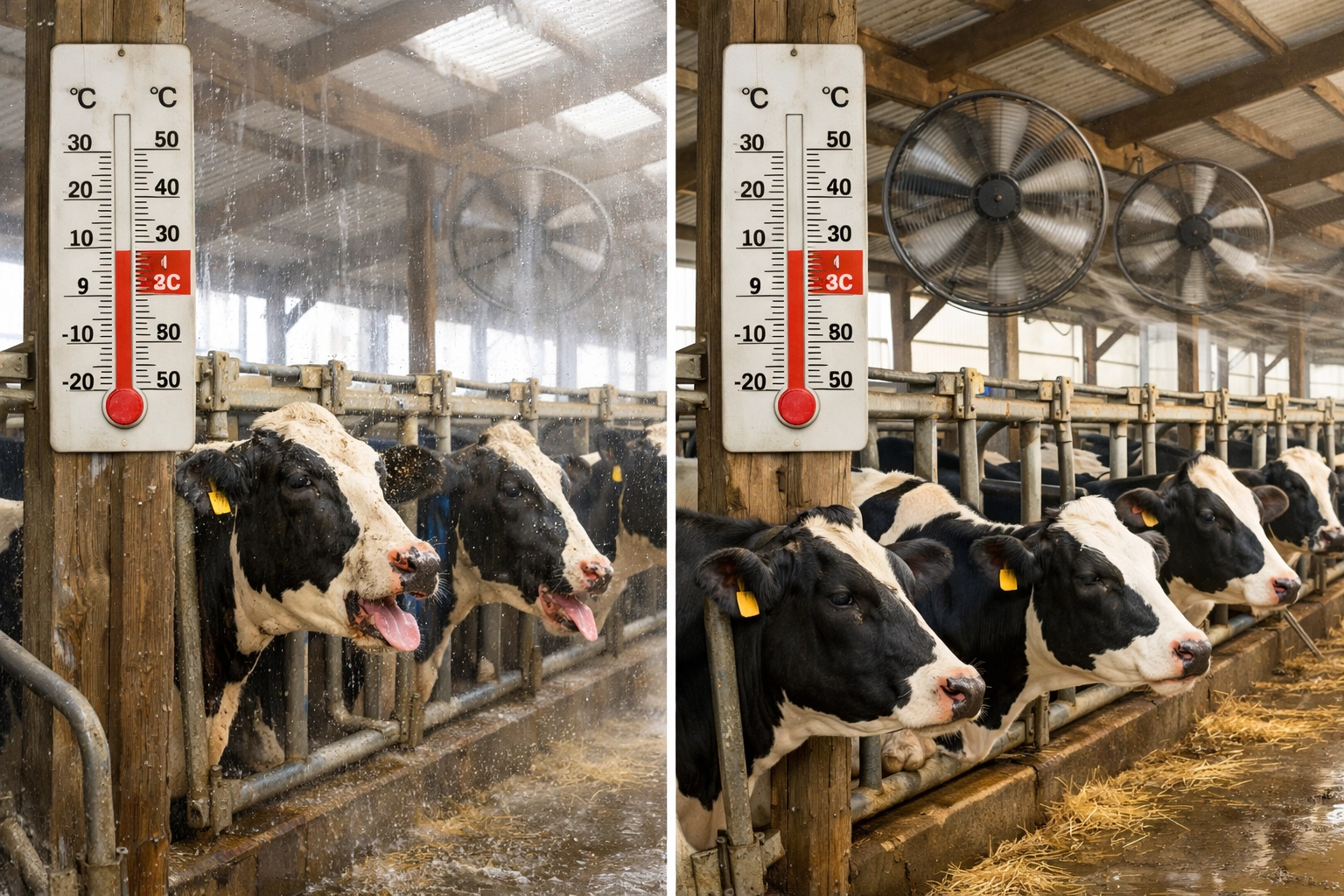
In the second scenario, low humidity facilitates rapid evaporative cooling. Air movement further enhances heat dissipation. The animal maintains thermal equilibrium more effectively, even at the elevated temperature.
This demonstrates why air temperature alone provides insufficient guidance for environmental control decisions. Multiple parameters must be integrated to assess actual thermal conditions.
The Australian Apparent Temperature Model
Australian meteorologists developed the Apparent Temperature formula to quantify human thermal perception. This model accounts for temperature, humidity, and wind speed. The calculation produces a single value representing how conditions actually feel, rather than what a thermometer indicates.
The formula incorporates vapor pressure derived from relative humidity and temperature. Wind speed modifies the result, with increased air movement reducing apparent temperature through enhanced convective cooling. The model distinguishes between hot conditions (where humidity dominates perception) and cold conditions (where wind chill becomes the primary factor).
This approach applies directly to livestock management. Cattle experience thermal stress based on the combined effect of environmental parameters, not temperature in isolation. The Apparent Temperature concept provides a framework for multi-parameter assessment.
Temperature-Humidity Index and Heat Stress Quantification
The dairy industry utilizes the Temperature-Humidity Index (THI) to evaluate heat stress risk. This metric combines dry bulb temperature and relative humidity into a single value correlated with physiological stress responses in cattle.
Critical THI thresholds have been established through research:
- THI 68: Heat stress begins. Milk production starts to decline. Respiratory rate increases.
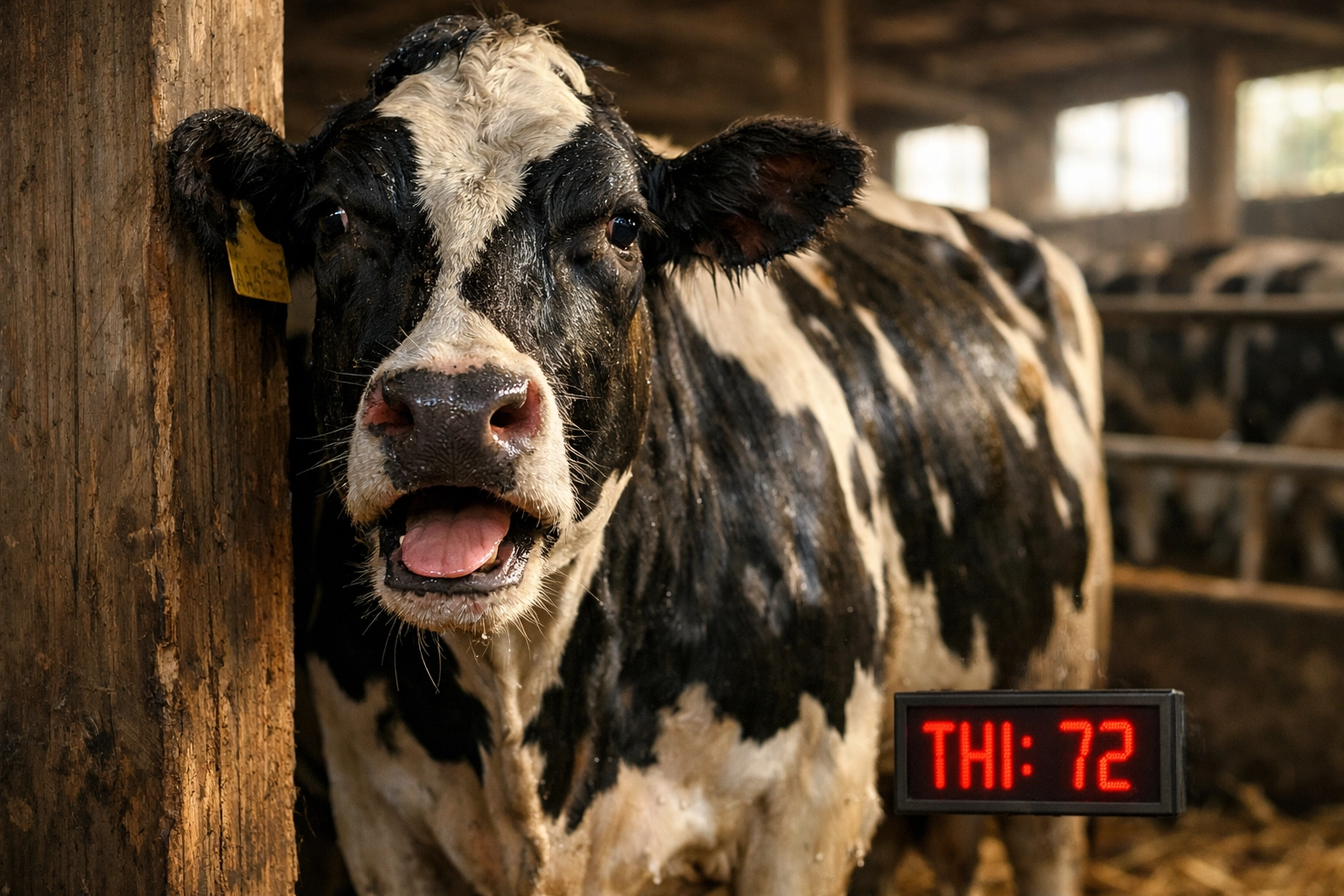
- THI 72: Moderate stress. Noticeable reduction in feed intake. Elevated body temperature.
- THI 80: Severe stress. Significant production losses. Reproductive function impaired.
- THI 90: Emergency conditions. Animal welfare compromised. Health risks escalate.
The Heat Stress Index (HSI) extends this concept, providing more granular assessment of thermal load. Where THI offers categorical classification, HSI quantifies the intensity of stress on a continuous scale. This enables proportional response from environmental control systems.
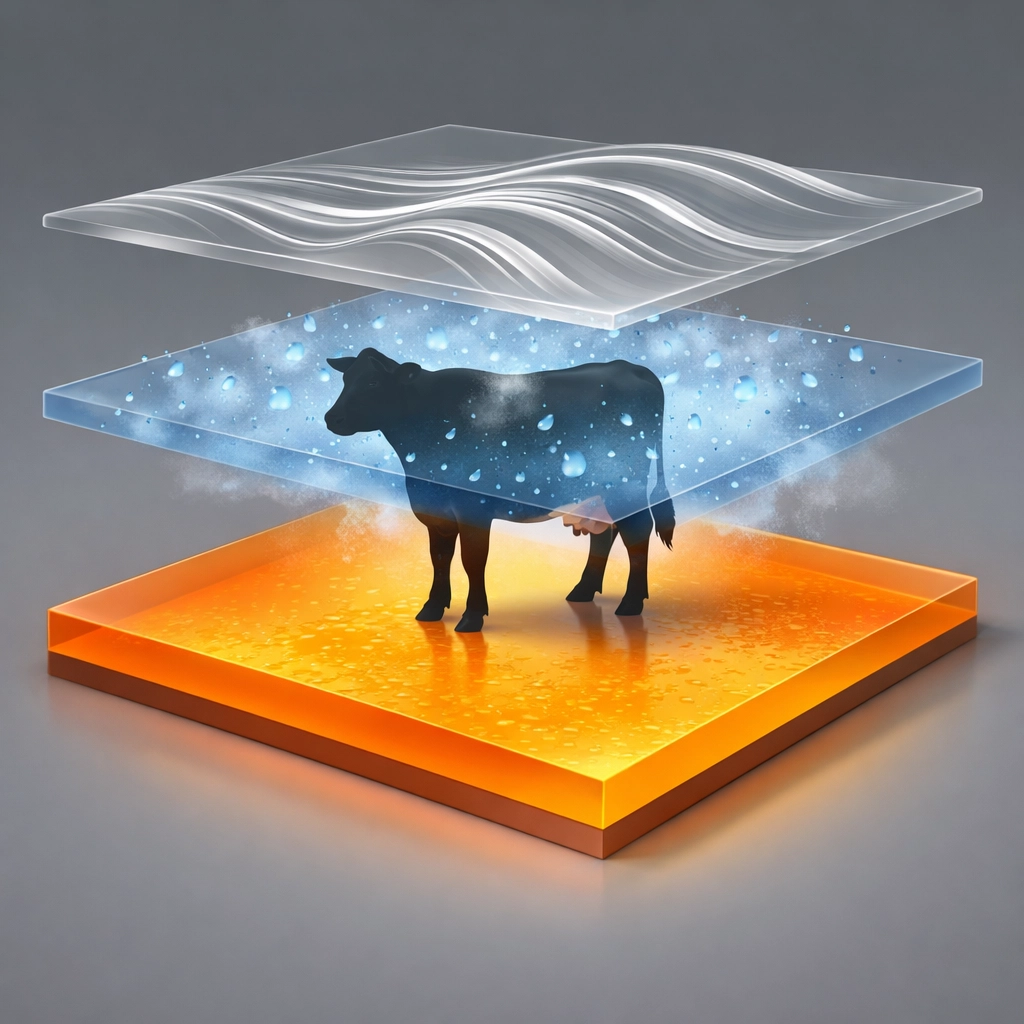
A critical observation: cattle enter heat stress at THI 68, which corresponds to approximately 22°C at 50% humidity. Humans remain comfortable under these conditions. This discrepancy explains why producer perception often underestimates animal discomfort. By the time a human operator feels warm, the herd has experienced stress for hours or days.
Multi-Parameter Sensing for Accurate Assessment
Conventional barn thermostats measure air temperature at a single location. This provides no information about humidity, air movement patterns, or spatial variation within the building. Environmental conditions differ substantially between the location of the thermostat and the animal zone.
The Agrimesh system deploys distributed emBreath sensors throughout the facility. Each unit continuously monitors temperature, relative humidity, CO2, and ammonia concentration. Data streams to the AI platform in real-time.
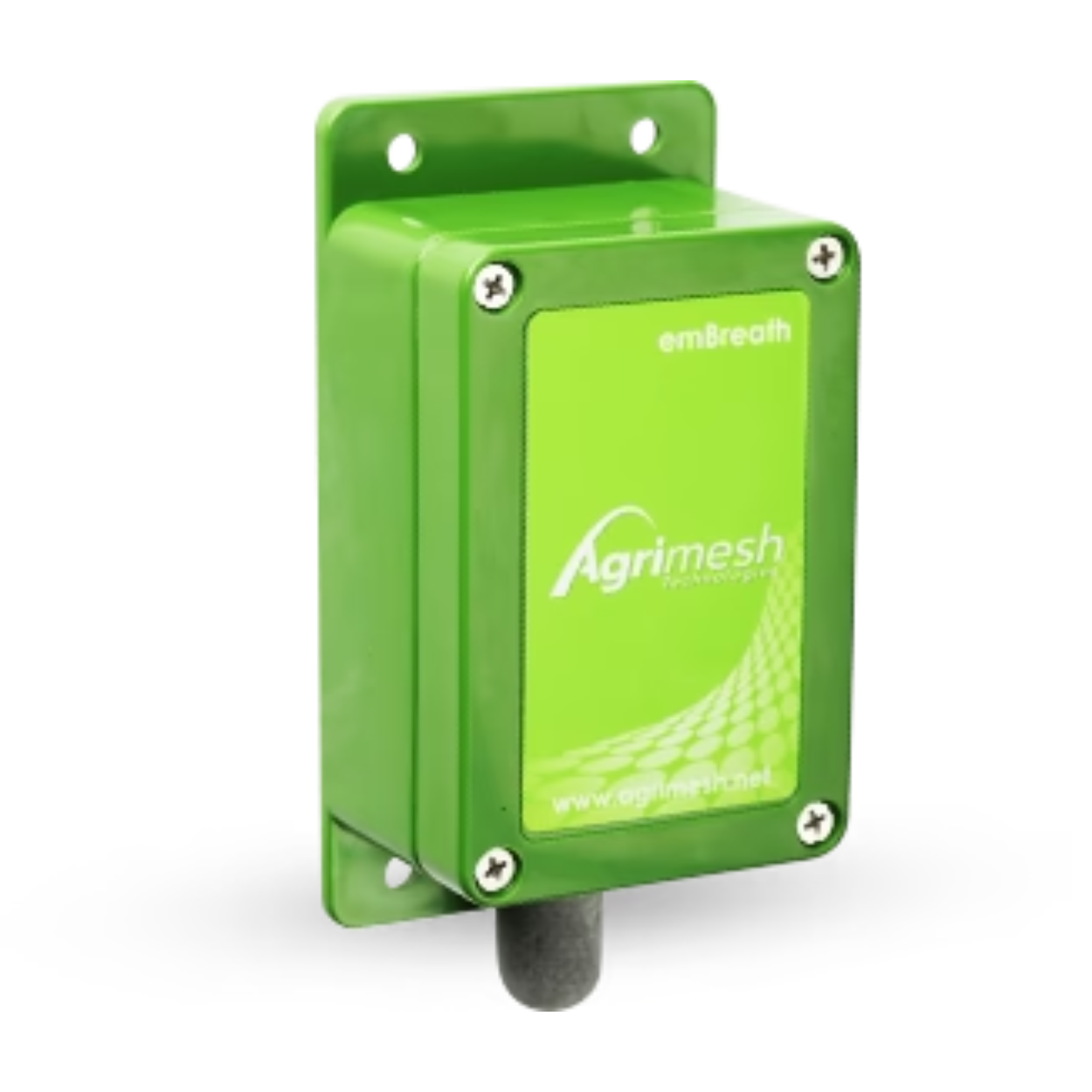
The control algorithm calculates Apparent Temperature and HSI for each sensor location. This reveals spatial variation within the barn. Areas near feed lanes may experience different conditions than resting zones. End walls may differ from the center sections.
With comprehensive environmental data, the system identifies specific areas requiring intervention. Ventilation adjustments target actual thermal load rather than responding to a single temperature reading that may not represent conditions where animals are located.
AI-Driven Response to Thermal Conditions
Traditional controllers execute programmed rules: if temperature exceeds setpoint by X degrees, increase ventilation by Y percent. These linear relationships cannot accommodate the non-linear interaction between temperature, humidity, and air movement.
The Agrimesh AI analyzes patterns across all monitored parameters. The system learns how the building responds to control actions under various conditions. When HSI indicates thermal stress, the AI determines the optimal combination of ventilation rate, fan staging, and cooling system activation to restore comfort most efficiently.
During high humidity conditions with moderate temperature, the AI prioritizes air exchange to reduce moisture content. In hot, dry conditions, evaporative cooling receives emphasis. The response adapts to the specific combination of factors causing stress, not just temperature magnitude.
The system also anticipates changes. By monitoring rate of change in temperature and humidity, the AI initiates preventive action before HSI reaches critical thresholds. This proactive approach maintains stable conditions rather than reacting to stress after it occurs.
Operational Benefits of Comfort-Based Control
Accurate thermal assessment translates directly to production outcomes. Research consistently demonstrates the relationship between heat stress and milk yield. For every unit increase in THI above 68, milk production declines approximately 0.2 kg per cow per day. In a 100-cow herd, inadequate heat stress management during summer months represents significant economic loss.
Reproductive performance degrades under thermal stress. Conception rates decline. Embryo survival decreases. The effects persist beyond the immediate stress period, impacting herd productivity for months.
Health indicators improve when environmental control maintains actual thermal comfort. Reduced respiratory stress decreases susceptibility to disease. Lower physiological load improves immune function. Lameness incidence decreases when cattle spend more time resting in comfortable conditions.
Energy efficiency improves through precise control. Systems that respond to air temperature alone often over-ventilate during low-humidity conditions or under-ventilate when high humidity compounds moderate temperatures. Unnecessary ventilation wastes energy and may create drafts that cause cold stress in certain zones.
The comfort-based approach operates equipment only to the extent required to maintain target HSI. This minimizes energy consumption while ensuring adequate environmental control. Producers report 15-25% reductions in ventilation energy costs after implementing AI-driven systems that account for multiple parameters.
Implementation Considerations
Transitioning from temperature-based to comfort-based control requires distributed sensing infrastructure. Single-point measurement cannot provide the spatial resolution necessary for accurate HSI calculation throughout the facility. Sensor placement should reflect animal distribution and areas where environmental conditions may vary.
The emBreath sensor network communicates wirelessly with the control platform. This eliminates wiring requirements and facilitates installation in existing facilities. Sensors require calibration to ensure accuracy, particularly for humidity measurement which affects THI calculation significantly.
The AI system requires an initial learning period to characterize building response. During this phase, the platform observes how environmental parameters change in response to control actions. Building thermal mass, ventilation capacity, and cooling system performance all influence response dynamics. Once the system develops an accurate model, autonomous optimization begins.
Conclusion
The thermometer on the barn wall provides incomplete information. Cattle experience thermal conditions as the integrated effect of temperature, humidity, and air movement. Control systems that respond only to air temperature operate without critical data necessary for maintaining animal comfort.
Multi-parameter sensing enables calculation of Apparent Temperature and HSI, providing accurate assessment of actual thermal conditions. AI-driven control responds to these comfort metrics rather than temperature alone, optimizing environmental management for animal welfare, production performance, and energy efficiency.
The technology to implement comfort-based control exists and operates in commercial dairy facilities. The transition from single-parameter to multi-parameter environmental management represents a fundamental improvement in how the industry approaches barn climate control.
