
Static pressure is one of the most overlooked settings in livestock and poultry buildings. It is not visible, but it directly affects whether fresh air spreads evenly, mixes properly, and avoids creating cold drafts in the animal zone.
What static pressure is
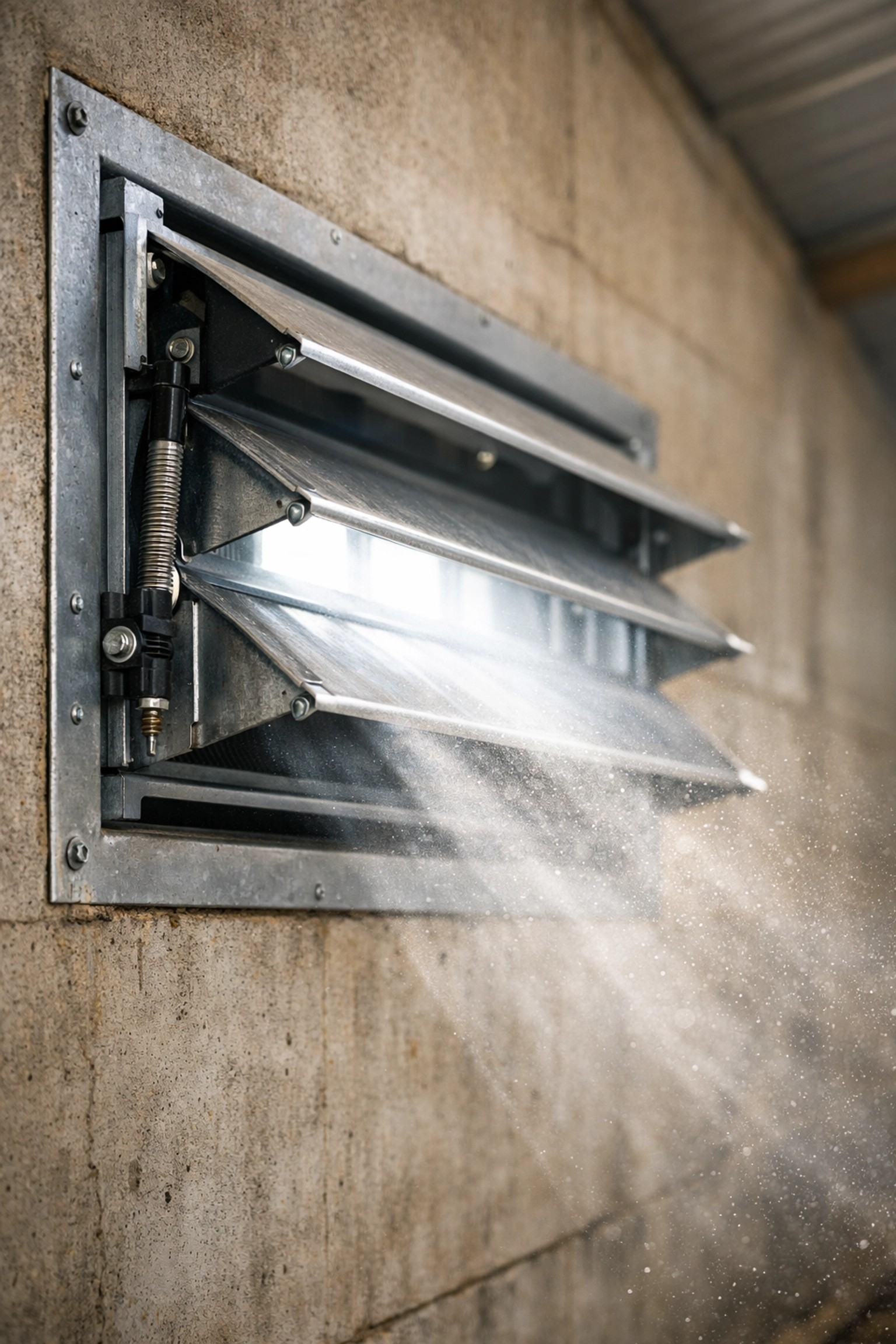
Static pressure is the resistance air meets as it moves through the building. In a properly managed barn, a slight negative pressure is created by exhausting a bit more air than is brought in. This forces fresh air to enter through controlled inlets instead of leaking through cracks and unwanted openings.
Static pressure is commonly read in inches of water (in. w.c.). In many livestock buildings, typical targets often fall around 0.05 to 0.15 inches of water, depending on the ventilation style and the season. If it is too low, air sneaks in anywhere and tends to drop straight into the animal area. If it is too high, inlets can whistle, airflow patterns become harsh, and fans work harder than necessary.
Why static pressure matters
Static pressure and airflow are tightly linked. As resistance goes up, fan performance drops, often faster than expected. In practical terms, a dirty shutter, a clogged filter, or a partly blocked inlet can reduce airflow significantly while power use increases.
When static pressure stays stable, a few important things tend to happen:
- Fresh air enters through the inlets at a predictable speed.
- The air stream projects into the room and mixes with warm air before reaching animals.
- Drafts are reduced and “dead zones” with stale air are less likely.
- Exhaust fans operate closer to their efficient range.
Signs static pressure is off
When static pressure is too high, the following are commonly observed:
- Air is pulled through uncontrolled openings (door gaps, leaks, weak seals).
- Inlets whistle or produce a steady wind noise.
- Fans run hard, but the building still feels under-ventilated.
- Electrical consumption rises without a clear air-quality improvement.
- Animals avoid certain areas.
When static pressure is too low, these issues tend to show up:
- Inlet airspeed is too low, so incoming air drops quickly instead of throwing and mixing.
- Cold air falls quickly and creates drafts over animals.
- Temperature varies significantly across the building.
- Humidity builds up in corners or areas with poor circulation.
Why it is hard to keep it stable
Keeping static pressure consistent is a moving target. Outdoor wind loads change minute by minute. Outside temperature affects air density and the way pressure behaves across the building envelope.
Inside the barn, conditions also shift:
- Heat load changes with animal age, weight, and activity.
- Fresh-air demand varies with moisture and CO2 production.
- Components slowly add resistance over time (dust buildup, wear, partial obstructions).
Traditional controllers often rely on fixed curves or manual inlet tweaks. That can work on calm days, but it tends to struggle when multiple factors change at once.
How Agrimesh automates static pressure control
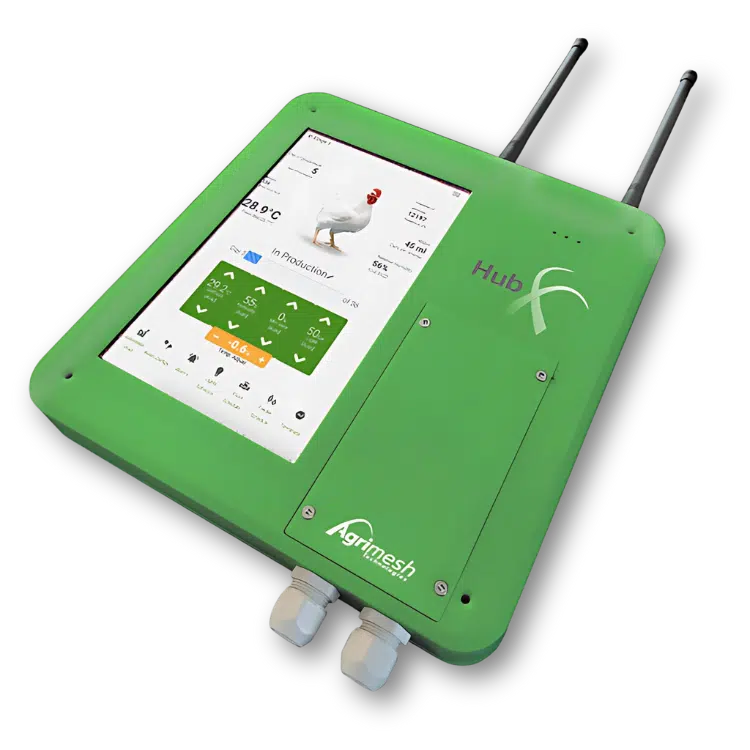
Agrimesh AI automates static pressure control by monitoring the building continuously and making small coordinated adjustments. Static pressure is measured in real time by the emBreath sensor, and the reading is compared to the current target for the season and operating mode.
When the pressure drifts, corrections are calculated and applied automatically:
- The emActuator module controls the air inlet actuators, opening or closing inlets to keep inlet airspeed and throw where it should be.
- Exhaust fan output can also be adjusted to maintain the overall balance of air coming in versus air going out.
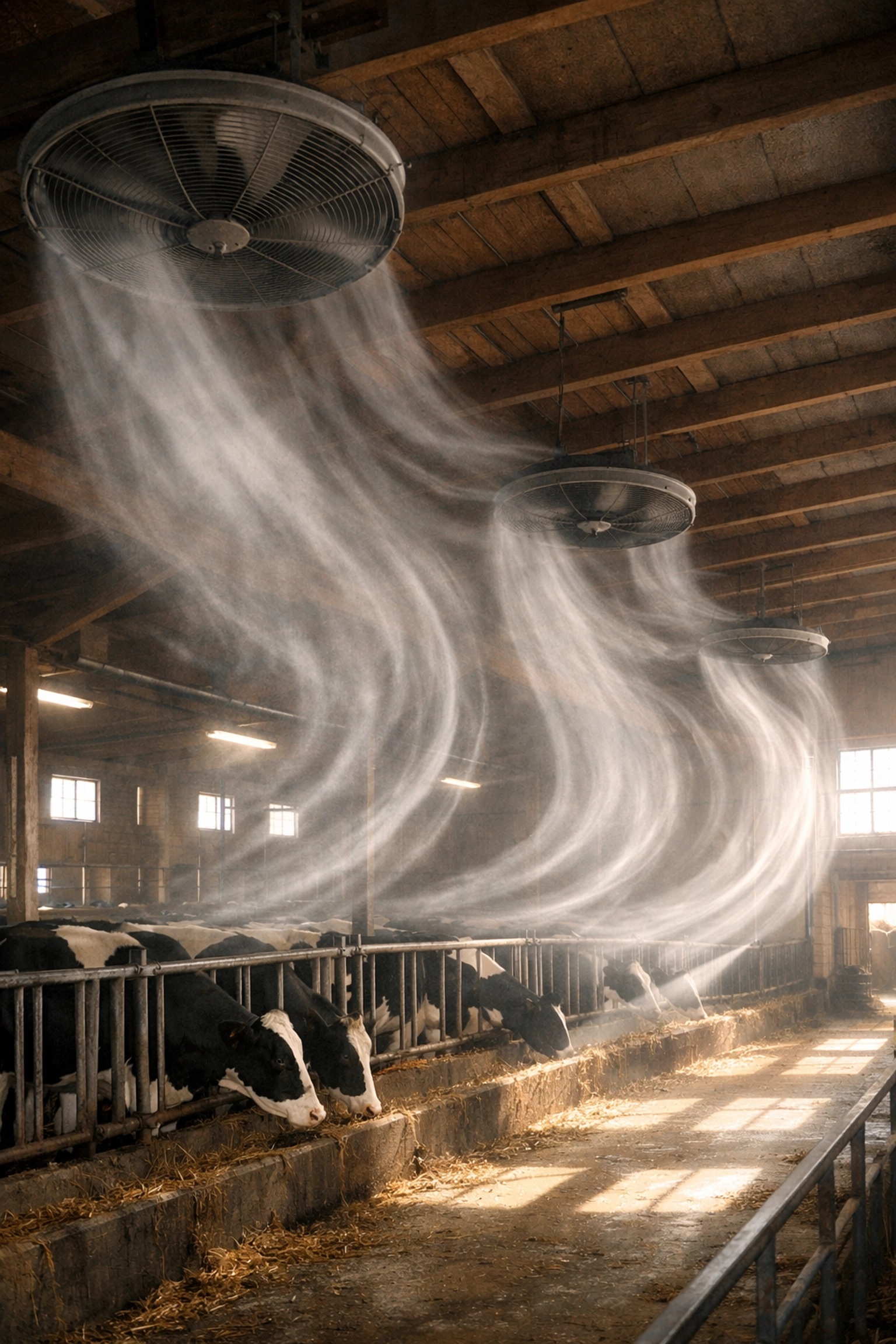
The goal is steady airflow patterns that support good mixing. With stable static pressure, incoming air tends to attach to the ceiling, travel far enough to mix with warm room air, and then settle gently into the animal zone. This is one of the most reliable ways to reduce drafts while still exchanging enough air.
The impact on air distribution and mixing
Stable static pressure helps keep inlet airspeed consistent. In tunnel or cross-vent setups, this matters because inlet speed is what gives the air jet enough “throw” to reach the center of the building and mix before it drops.
If pressure is too low, air enters slowly and falls right away, creating a cold zone under the inlet. If pressure is too high, air enters too fast and can cut through the room as an uncomfortable draft.
By adjusting inlet opening and exhaust as a system, Agrimesh AI helps maintain mixing conditions that are more consistent across changing weather and building conditions.
Energy costs and efficiency
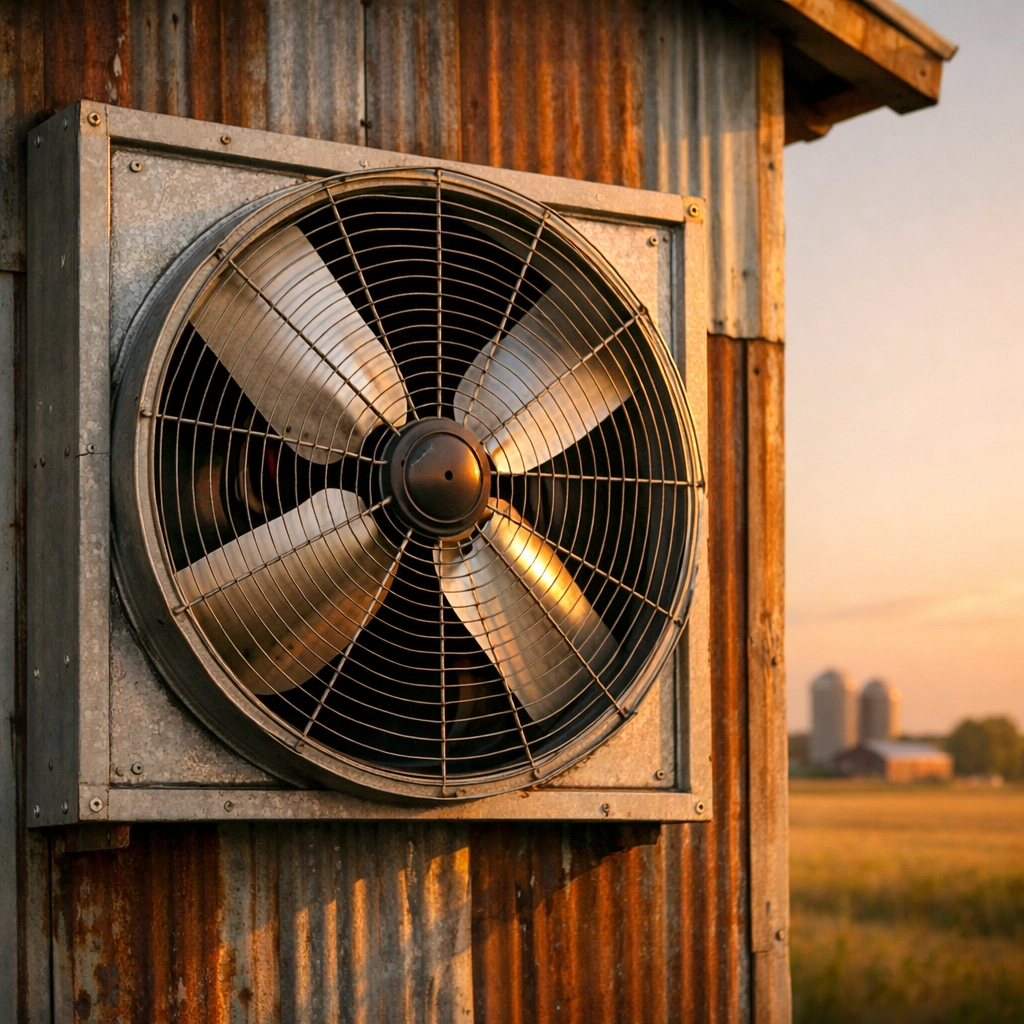
When the building runs at an appropriate static pressure, fans tend to operate closer to their efficient point. When pressure is pushed too high, extra motor power is spent overcoming resistance. When pressure is too low, airflow distribution usually suffers, and operators often compensate by running fans harder than necessary.
Field data commonly shows that tighter control of static pressure can reduce wasted energy without sacrificing air quality.
Health and performance protection
Poor static pressure control can contribute to uneven conditions inside a barn. Drafty areas can create localized cold stress. Under-ventilated areas can hold moisture and gases, which increases the risk of respiratory issues and litter or bedding problems.
With steadier pressure and better mixing, air quality tends to be more uniform across the building. Abnormal pressure behavior can also be used as an early signal of developing issues such as a stuck inlet, a failing fan, or a new air leak.
Automatic seasonal adjustment
Static pressure targets usually change with the season:
- In winter, slightly higher pressure is often used to ensure cold air comes through inlets and mixes before reaching animals.
- In summer, lower pressure targets may be acceptable because the priority shifts toward maximum airflow and heat removal.
Agrimesh can adjust targets automatically based on operating mode and conditions, so the same building can behave predictably across very different days.
How static pressure ties into the rest of the environment
Static pressure does not operate in isolation. It interacts with temperature, humidity, and air quality. When ventilation is increased to control CO2 or moisture, inlet position and fan output should be coordinated so pressure stays within range.
This coordinated approach is where automation helps most: fewer manual adjustments, more stable airflow patterns, and fewer surprises during weather swings.
To learn more about how Agrimesh uses AI to optimize ventilation parameters in livestock buildings, visit agrimesh.net.
