
When temperatures drop, most farm operators focus on heating systems and insulation. Ventilation fans, however, often remain overlooked despite representing one of the most significant sources of heat loss in agricultural buildings during winter months.
The Hidden Energy Drain
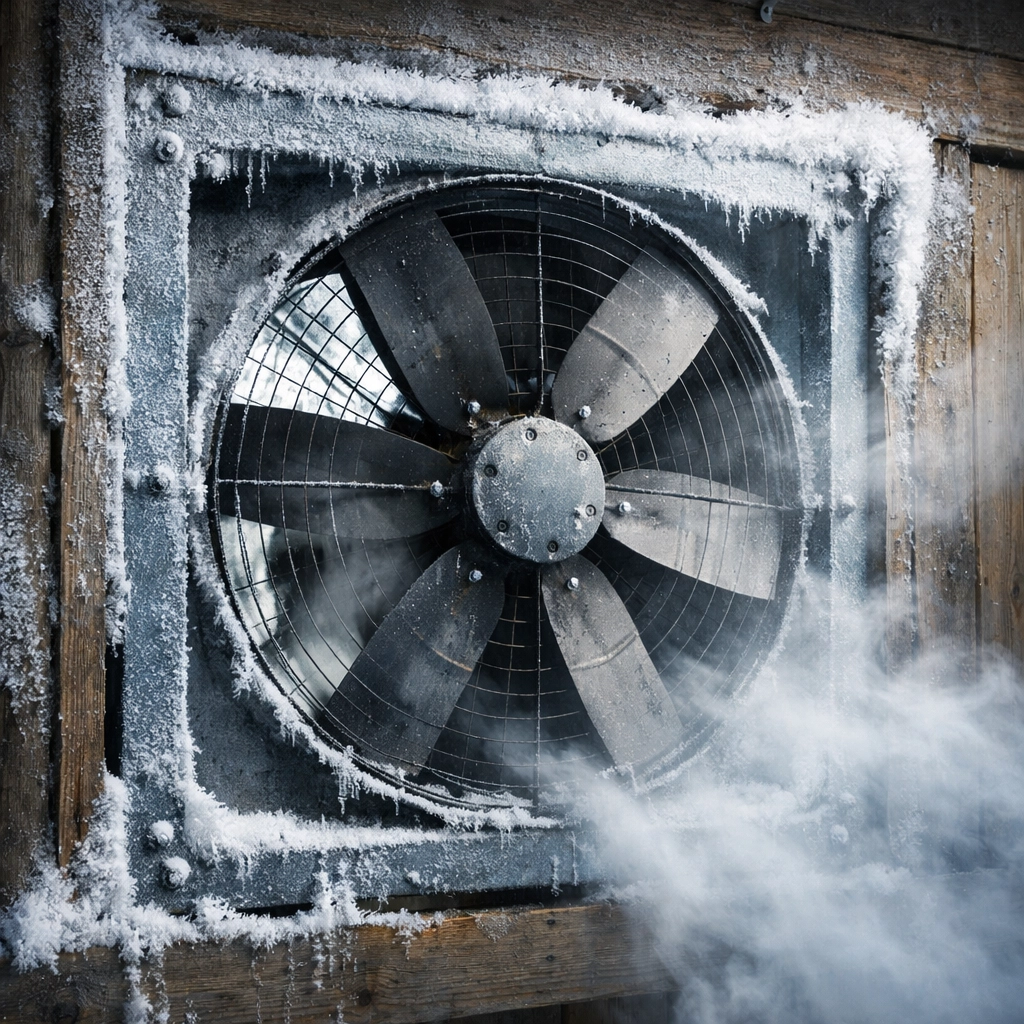
Ventilation fans create large openings in building envelopes. When not actively running, these openings function as direct pathways for heated air to escape. Warm air naturally rises and seeks the path of least resistance. An uninsulated or poorly sealed fan housing provides exactly that.
The mechanism is straightforward. Heated air within the barn rises toward the ceiling, encounters the fan opening, and exits directly to the exterior. Cold outdoor air simultaneously infiltrates through the same pathway, creating a continuous exchange that defeats heating efforts and increases energy consumption.
Impact on Agricultural Operations
The consequences extend beyond elevated heating costs. Uncontrolled heat loss through fan openings affects multiple aspects of barn management.
Energy Waste: Heating systems must compensate for continuous heat loss, running longer cycles and consuming more fuel. The financial impact accumulates throughout the heating season.
Temperature Instability: Thermal bridges through fan housings create localized cold zones. These variations complicate climate control and can affect animal comfort and performance.
Condensation Formation: When warm, moist air from the barn interior meets cold surfaces around unsealed fan openings, condensation develops. This moisture accumulation can lead to structural deterioration, mold growth, and reduced air quality.
Equipment Degradation: Exposure to winter conditions accelerates wear on fan components. Ice formation and temperature cycling reduce equipment lifespan and increase maintenance requirements.
The Thermal Bridge Effect
Unsealed fans create what building science terms a thermal bridge: a pathway that allows heat to bypass insulation systems. In agricultural buildings, this effect multiplies across multiple fan installations.
A typical livestock or poultry facility may contain six to twelve ventilation fans. Each represents a potential thermal bridge. When added together, the cumulative opening can equal several square meters of uninsulated surface area directly connecting interior heated space to exterior cold.
The problem intensifies in facilities using variable speed or staged ventilation systems. During periods of minimal ventilation demand, fans remain stationary while their openings continue to facilitate heat loss.
Detection Challenges
Traditional monitoring systems struggle to identify heat loss through fan housings. Temperature sensors measure general barn conditions but cannot pinpoint localized thermal anomalies around specific equipment.
Manual inspection presents difficulties. Accessing fan housings typically requires elevated platforms or attic spaces. Visual assessment provides limited information about actual heat transfer rates or the efficiency of existing insulation measures.
Thermal imaging can identify problem areas but requires specialized equipment and trained operators. Regular comprehensive thermal surveys remain impractical for most farm operations.
AI-Driven Thermal Management
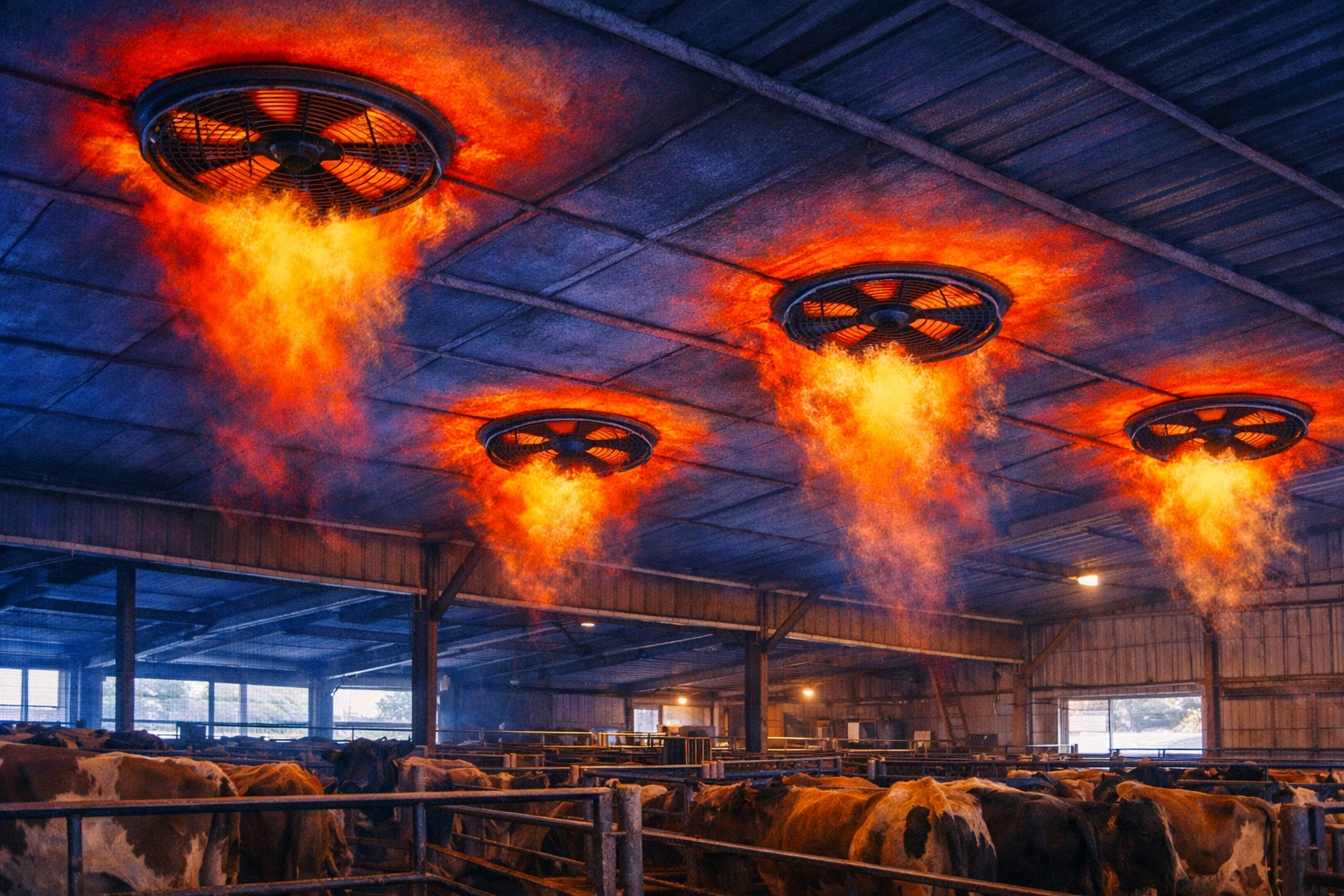
Agrimesh AI approaches this challenge through continuous environmental monitoring and pattern analysis. The system evaluates multiple data streams to identify thermal inefficiencies that indicate heat loss through ventilation pathways.
Anomaly Detection: The AI analyzes heating system runtime relative to outdoor temperatures and expected heat loss rates. Deviations from predicted performance patterns trigger investigation of potential thermal bridges.
Localized Monitoring: Strategic sensor placement enables detection of temperature variations near fan installations. The system correlates these readings with fan operation status to identify heat loss during idle periods.
Energy Consumption Analysis: By tracking heating fuel usage or electrical consumption against weather data and ventilation schedules, the AI identifies unexplained energy demand that may indicate thermal bridging.
Predictive Adjustments: When thermal anomalies are detected, the system modifies ventilation and heating strategies to minimize energy waste. This may include adjusting fan sequencing, modifying minimum ventilation rates, or redistributing heating output.
The AI continuously learns building-specific thermal characteristics. Over time, it develops increasingly accurate models of heat loss patterns and identifies the most effective mitigation strategies for each facility.
Practical Considerations
Addressing fan insulation requires a systematic approach. Power disconnection remains the essential first step before any work around fan equipment. Circuit breakers must be switched off and wall switches tested to verify no electrical supply.
Sealing methods vary based on fan type and building configuration. Removable insulated covers provide the most flexible solution, allowing easy removal when seasonal conditions change. Custom-built enclosures around fan housings offer permanent protection while maintaining accessibility for maintenance.
Insulation materials must withstand agricultural environments. Resistance to moisture, ammonia exposure, and temperature extremes ensures long-term effectiveness. Proper sealing of all gaps and penetrations prevents air leakage that defeats insulation efforts.
Documentation of insulation installations supports future maintenance and seasonal transitions. Clear marking of insulated fans and removal procedures prevents accidental operation while covers remain in place.
System Integration
Effective thermal management extends beyond individual fan insulation. Comprehensive climate control integrates multiple building systems to optimize overall energy efficiency.
Agrimesh AI coordinates ventilation, heating, and humidity control to maintain target conditions while minimizing energy consumption. When fan insulation reduces heat loss, the system adjusts heating output accordingly, preventing overcompensation and capturing maximum energy savings.
The platform's real-time monitoring enables immediate response to changing conditions. If insulation effectiveness degrades due to displacement, damage, or improper installation, the system detects resulting thermal anomalies and alerts operators to investigate.
Continuous Optimization
Winter thermal management represents an ongoing process rather than a one-time adjustment. Building envelopes shift with temperature changes, materials settle, and equipment performance varies over time.
Regular monitoring through AI-driven systems ensures thermal efficiency measures remain effective throughout the heating season. The technology identifies gradual degradation before it results in significant energy waste or comfort issues.
This proactive approach transforms facility management from reactive problem-solving to continuous optimization. Energy savings accumulate day after day, while improved environmental stability supports animal health and productivity.
The Bottom Line
Fan insulation addresses a frequently overlooked source of winter heat loss in agricultural facilities. The combination of proper sealing techniques and intelligent monitoring systems minimizes energy waste while maintaining necessary ventilation capacity.
Agrimesh AI enhances this approach by identifying thermal inefficiencies that manual monitoring might miss and optimizing system performance in response to real-time conditions. The result: lower heating costs, more stable environments, and reduced equipment wear: measurable improvements that benefit operations throughout the heating season.
