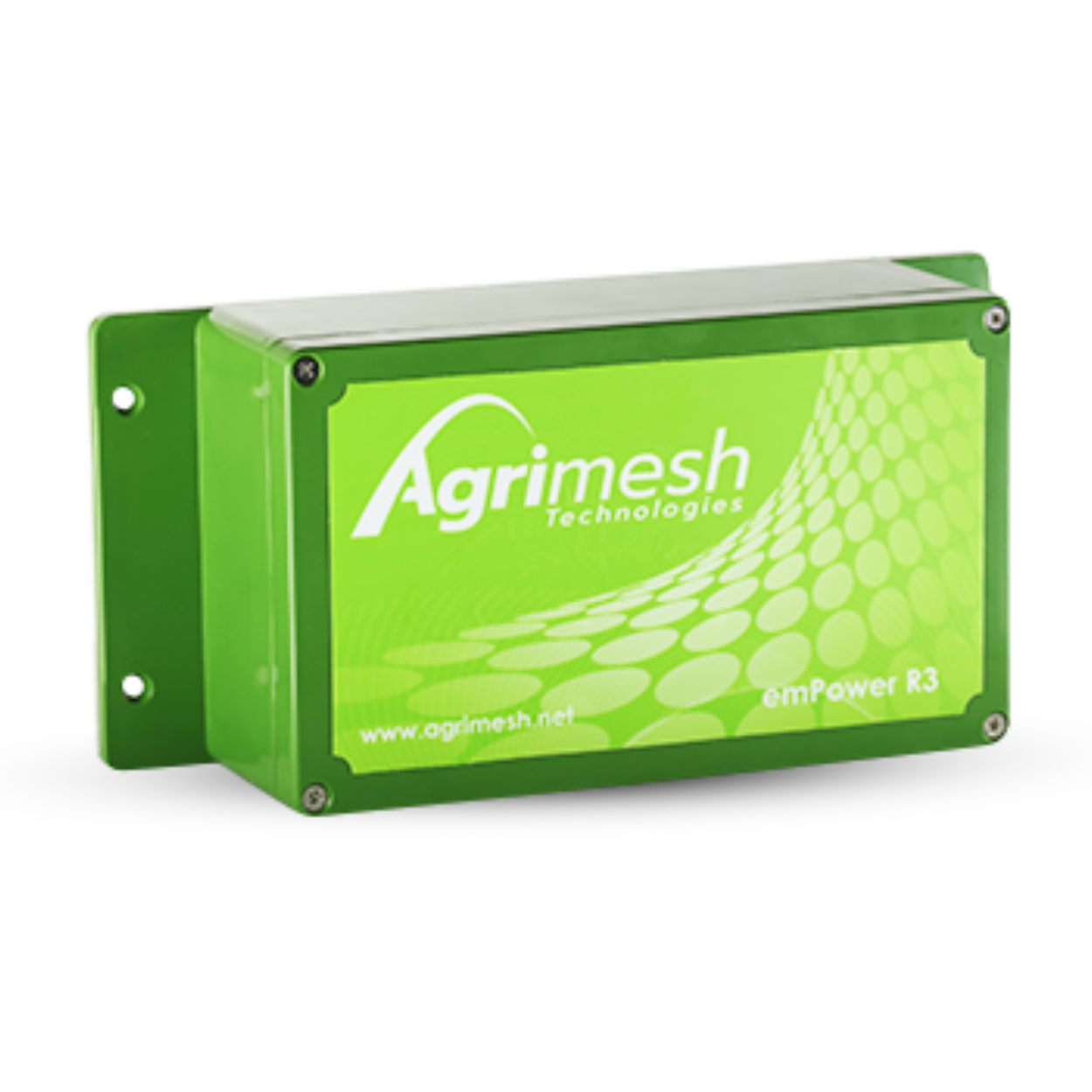
For decades, the standard for farm security was the "auto-dialer." It felt reliable. You’d walk through your barn, see the grey box on the wall, and know that if the temperature spiked or the power went out, that box would pick up the phone and call you. It was a simple, direct link between your livelihood and your pocket.
But as technology has evolved, this traditional setup has revealed a fundamental, structural flaw: one that can lead to catastrophic losses before you even realize something is wrong. In the world of AgTech, we call this the "reactive gap." At Agrimesh, we’ve spent years analyzing why these systems fail and how modern Internet Protocol (IP) and Artificial Intelligence (AI) provide the safety net that old-school phone lines simply cannot.
The shift from local phone alerts to IP-based monitoring isn't just an upgrade in convenience; it is a complete reversal of how your farm is protected. It is the move from waiting for a disaster to report itself to having a system that actively ensures everything is running as it should.
1. The Local Trap: Why Dialers Fail
Traditional farm monitoring systems are "local" systems. This means the intelligence: the part that decides whether or not to send an alarm: resides entirely inside your barn. If a sensor detects a problem, it sends a signal to the local controller, which then attempts to use a phone line or a cellular module to reach you.
On the surface, this makes sense. But it creates a single point of failure that is often the first thing to go in an emergency.
The "Silence of Death"
Imagine a severe summer storm. A lightning strike hits near your barn. It doesn’t just cause a power surge; it fries the communication module of your alarm system. Or perhaps, a high-wind event knocks down the telephone line connecting your farm to the outside world.
In this scenario, your alarm system is effectively dead. Because the system is local, it has no way of telling you that it has been destroyed. If the temperature in your poultry barn begins to rise rapidly because the fans have stopped, the sensors might be screaming, but the "voice" of the system: the dialer: is gone.
This is what we call the "Silence of Death." You are sitting at home, assuming everything is fine because your phone hasn't rung. In reality, the silence isn't a sign of safety; it’s a sign that your lifeline has been severed. A traditional system is reactive: it only communicates when it works. When it breaks, it says nothing.
Reactive vs. Proactive Monitoring
The local trap also extends to how maintenance is handled. With a traditional dialer, you only find out the battery is dead or the line is disconnected when you perform a manual test or, worse, when a disaster occurs and the alarm never comes. This puts the burden of monitoring the monitor on the producer.
In a modern agricultural environment, where intelligence artificielle is used to optimize every aspect of production, relying on a system that can fail silently is an unacceptable risk. The complexity of modern barns: with their sensitive ventilation requirements and high stocking densities: leaves very little margin for error.
2. The IP Advantage: The Power of the Heartbeat
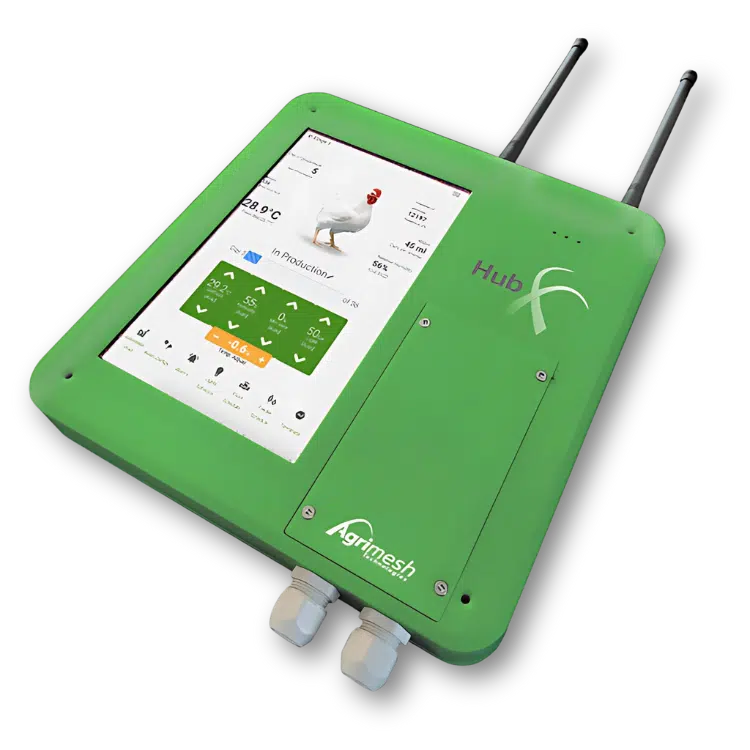
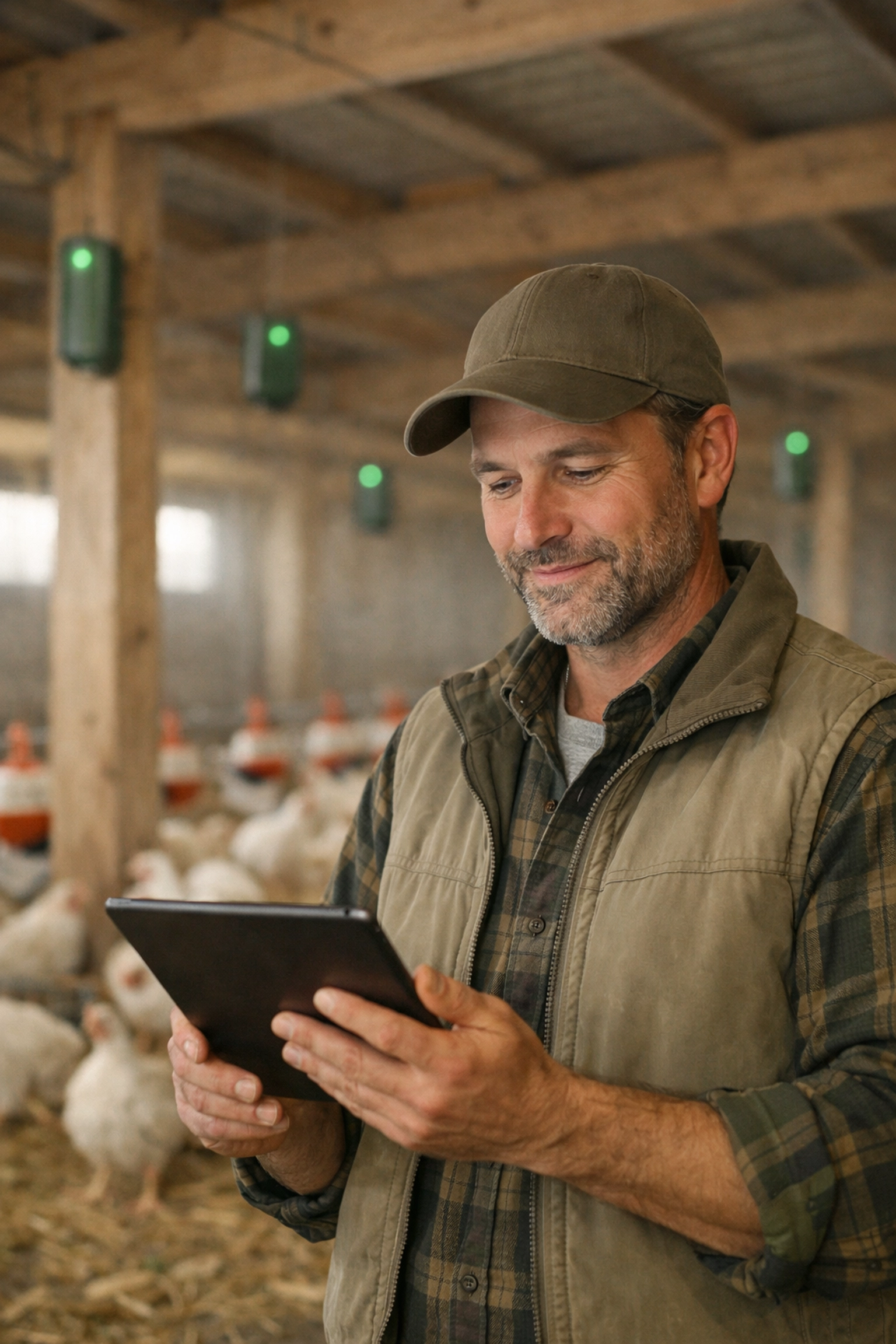
IP-based monitoring, like the system integrated into the Agrimesh HubX, operates on an entirely different logic. Instead of the barn being the "master" that decides when to call the server, the server acts as the overseer that constantly checks on the barn.
The "Heartbeat" Concept
Every few seconds, your Agrimesh system sends a tiny packet of data to our secure cloud servers. This is known as a "Heartbeat." It’s a signal that says, "I’m here, I’m powered on, and the internet connection is active."
The fundamental difference is where the "alarm trigger" lives. In an IP system, the trigger lives on the server. If our server expects a heartbeat at 2:00:00 PM and doesn't receive one by 2:00:10 PM, it doesn't just wait. It immediately recognizes that communication has been lost.
Because the server is located outside your farm (in a secure data center with redundant power and internet), it doesn't matter if your barn was hit by lightning, if a backhoe cut your fiber optic line, or if the power grid collapsed. The server knows the "heartbeat" has stopped, and it sends you an alert immediately.
This is proactive monitoring. You don’t get an alert because something broke; you get an alert because the system can no longer prove everything is okay.
Technical Robustness and Airflow Precision
Switching to IP doesn't just improve security; it improves the precision of your barn management. For instance, when we look at ventilation, many producers struggle with air infiltration. A common misconception is that leaks (through doors or cracks) are caused by static pressure being too low. In reality, air infiltration is driven by static pressure that is too high.
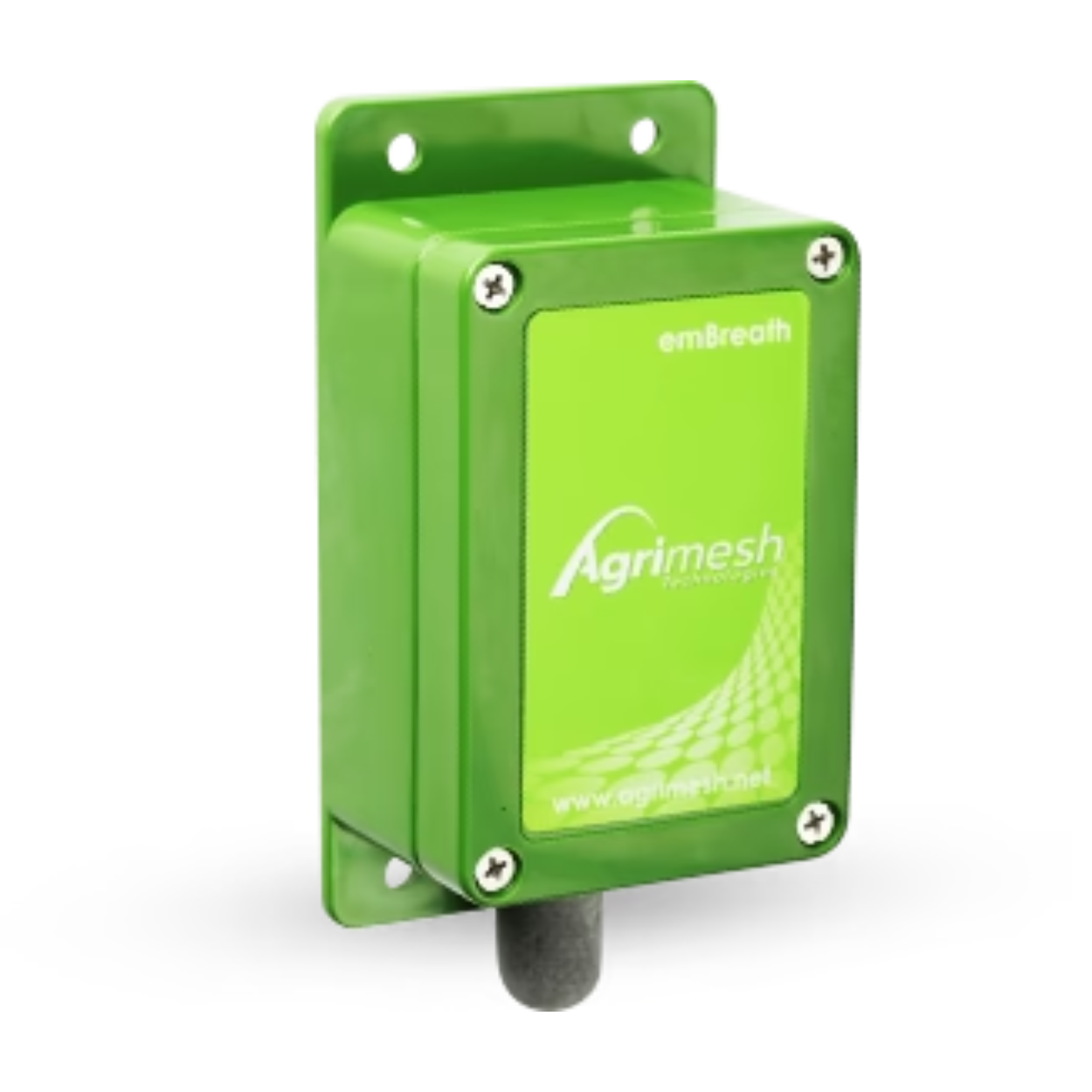
When your system is connected via IP, tools like the emBreath sensor can relay real-time air quality data (CO2, Ammonia, Humidity) to the cloud. Our AI can then adjust your emPower units to maintain the exact static pressure needed. If the pressure becomes too high, forcing air through every tiny crack in the building and chilling your livestock, the system adjusts instantly.
Without the high-speed data transfer of an IP connection, this level of AI-driven optimization would be impossible. You can learn more about how this integration works on our operation page.
Redundancy and Multi-Path Alerts
Another major advantage of IP-based systems is the ability to send alerts through multiple channels simultaneously. A traditional dialer calls one number at a time. If you’re in a dead zone or your phone is on "Do Not Disturb," you might miss the call.
The Agrimesh system can send:
- Push notifications to your smartphone.
- Text messages (SMS).
- Automated voice calls.
- Emails.
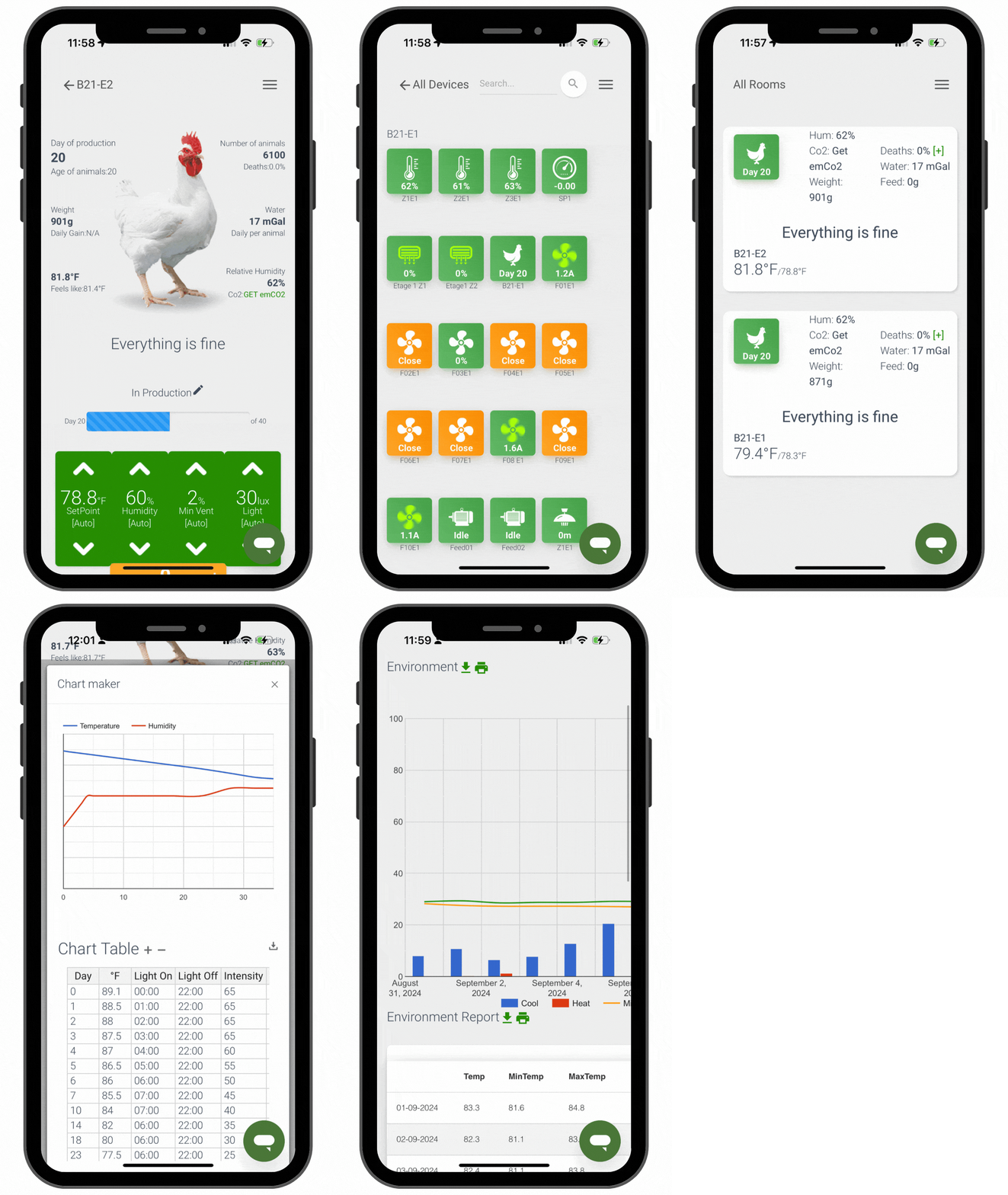
By spreading the alert across multiple platforms, the chances of the producer missing a critical event drop to near zero. Furthermore, the Agrimesh interface allows you to see exactly what is happening in the barn from anywhere in the world, allowing you to verify if an alarm is a false positive or a genuine emergency before you even get in your truck.
3. Conclusion: Choosing Peace of Mind
At the end of the day, farm monitoring is about one thing: peace of mind. You want to know that when you put your head on the pillow at night, your investment is safe.
The old way of doing things: relying on a local phone dialer: offers a false sense of security. It works under perfect conditions, but it fails under the exact conditions where you need it most. The "Silence of Death" is a risk no modern producer should have to take.
By moving to an IP-based system with a constant "Heartbeat," you are choosing a system that is always watching, always checking, and always ready to speak up the moment it loses contact with your barn. Whether you are managing poultry, swine, or dairy, the benefits of proactive monitoring are clear.
It’s time to stop wondering if your alarm system is working and start using a system that proves it every second of every day. If you’re ready to bridge the reactive gap and bring your farm into the era of AI-driven security, contact us today to see how the Agrimesh ecosystem can protect your future.
Summary of Benefits:
- No More Silent Failures: The server alerts you the moment the connection is lost.
- Real-Time Data: Access your barn conditions from anywhere via the Agrimesh products.
- AI Optimization: Use real-time data to manage static pressure and air quality with precision.
- Multi-Channel Alerts: Ensure you never miss a notification, regardless of where you are.
Don't wait for the silence to tell you there's a problem. Switch to a heartbeat you can trust.