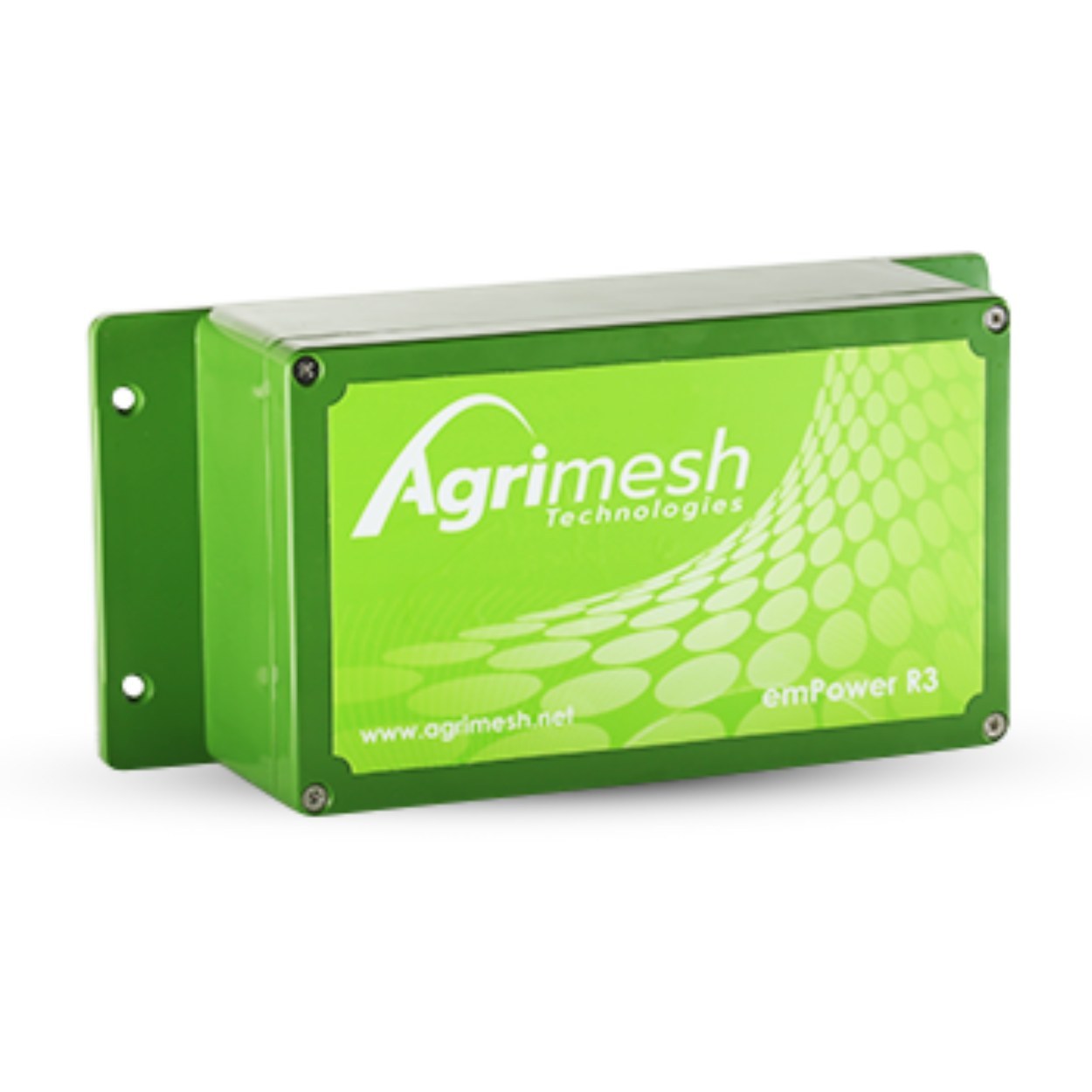
If you follow the news even a little bit, you’ve heard of Artificial Intelligence (AI). Most of the time, people are talking about ChatGPT, Gemini, or other tools that can write emails, create images, or summarize long documents. These are what we call Large Language Models (LLMs). They are impressive, they are fast, and they are changing the way we work in offices.
But here’s the thing: you wouldn't trust ChatGPT to manage the ventilation in your poultry barn or the heating in your greenhouse. And you shouldn't.
At Agrimesh, we use AI every day, but it’s a completely different breed than the one that writes poems. While ChatGPT is designed to predict the next word in a sentence, our system is designed to predict the next state of your building’s environment. One is built for conversation; the other is built for precision, survival, and optimization.
Understanding this difference is key to realizing why the future of farming isn't about "chatting" with your equipment, but about having a system that thinks three steps ahead of the weather.
Generative AI vs. Predictive AI
To understand why your controller is different, we have to look at what's under the hood. ChatGPT is "Generative AI." It has "read" almost everything on the internet and uses that data to generate new content based on probability. If you ask it to write a recipe, it knows which words usually follow each other in a recipe.
In a farm setting, we don't need probability based on words; we need precision based on physics. Agrimesh uses Predictive AI. Instead of reading books, our AI "reads" your barn. It analyzes data in real-time to understand the relationship between dozens of variables. It doesn't guess what should happen next; it calculates it based on the physical reality of your specific operation.
It’s Not Just One Data Point: The Power of Generalization
A common mistake in AgTech is focusing too much on a single sensor. Some people think that if you have a CO2 sensor, you have an AI-managed barn. That’s only a small part of the story.
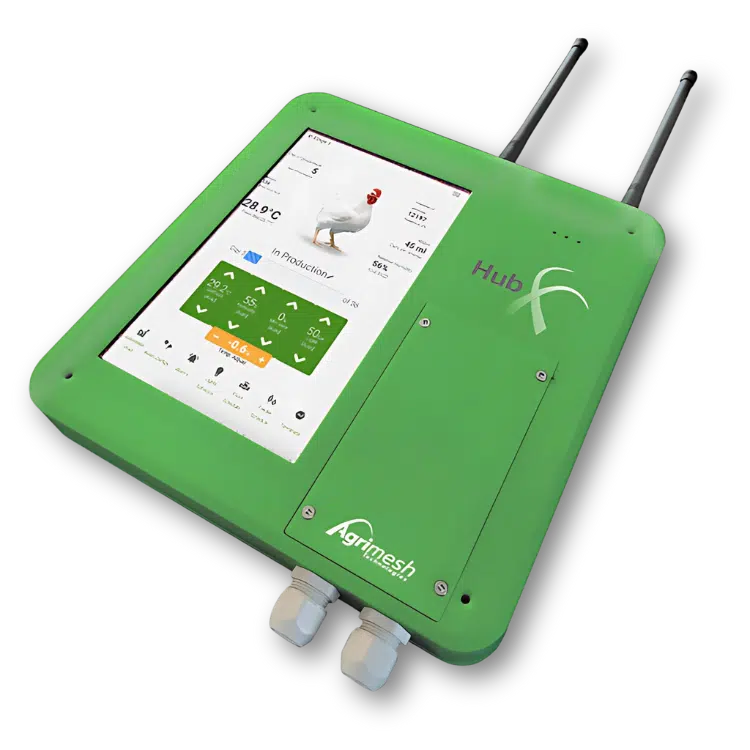
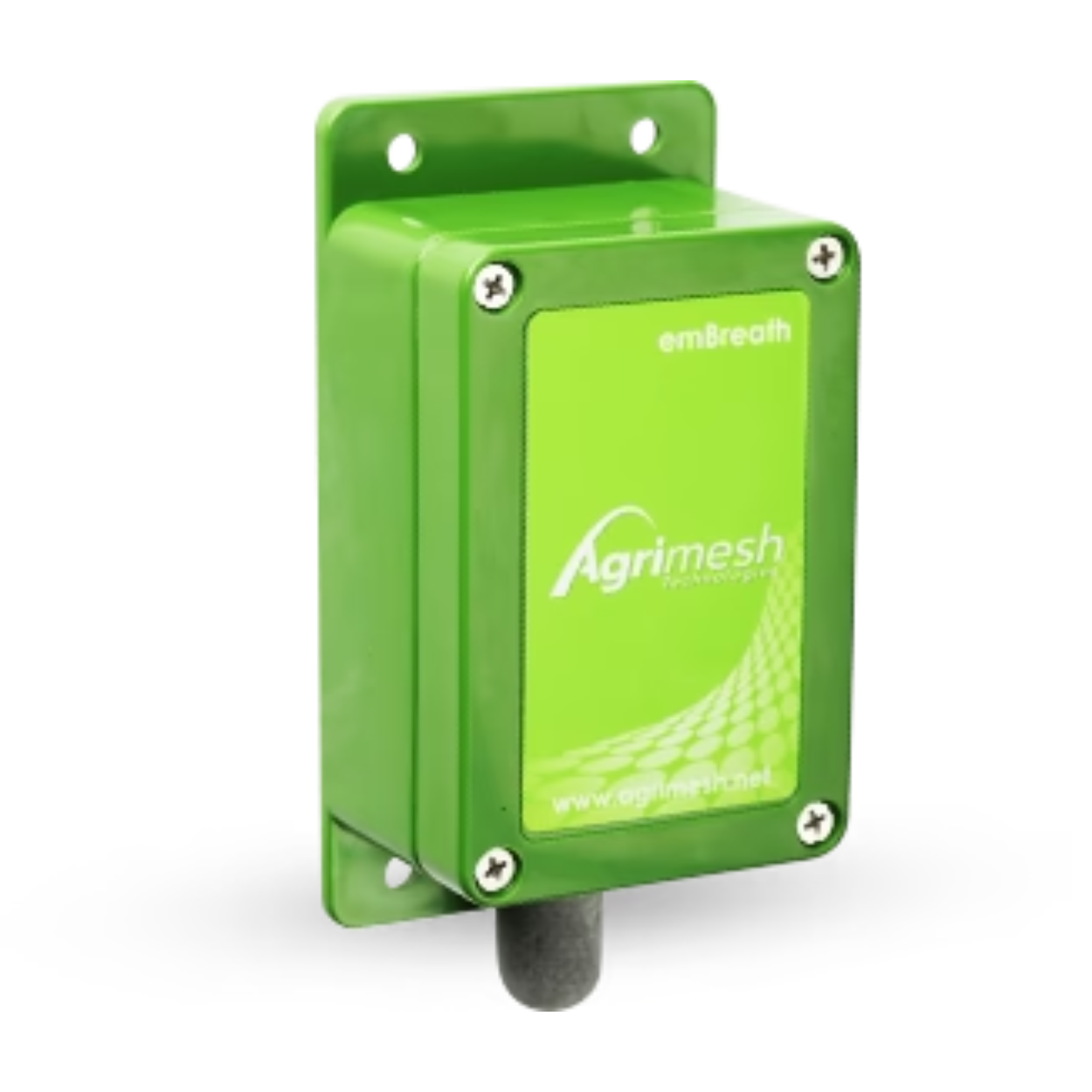
To truly optimize a living environment, the system must be holistic. Our AI doesn't just look at CO2 or ammonia (NH3) levels. It synthesizes a massive stream of information simultaneously:
- Internal Temperature and Humidity: The core metrics for animal comfort.
- Carbon Dioxide (CO2) and Ammonia (NH3): Key indicators of air quality and litter health.
- Outdoor Weather Conditions: Current temperature, wind speed, and humidity outside.
- Weather Forecasts: What is going to happen in the next 2, 6, or 12 hours.
- Water Consumption: Often the first indicator that something is wrong with the flock’s health.
- Equipment Status: How hard are the fans running? Is the heater on?
By looking at all these data points together, the AI can see patterns that a human: or a traditional controller: might miss. For example, if water consumption drops while the humidity rises slightly, the system might recognize an early sign of respiratory stress before a single bird shows symptoms. This is the difference between monitoring and intelligent management.
Proactive vs. Reactive: The 2 AM Difference
The biggest limitation of a traditional farm controller is that it is reactive. It works on a series of "if/then" statements. If the temperature hits 25°C, then turn on the fans. If the CO2 hits 3,000 ppm, then increase the minimum ventilation.
The problem with reactive management is that by the time the controller reacts, the "damage" is already starting. The temperature is already too high, or the air quality has already degraded. The system then has to work twice as hard to bring conditions back to the setpoint, which wastes energy and stresses the animals.
Agrimesh is proactive. Because it uses predictive AI, it knows that if the outdoor temperature is dropping and the birds are at a certain age, the humidity inside will likely spike in two hours. Instead of waiting for that spike, it makes tiny, incremental adjustments now to prevent the spike from ever happening.
This proactivity leads to what we call "flatline management." Instead of the jagged peaks and valleys of temperature and air quality you see with traditional systems, you get a smooth, stable environment. This stability is where the profit is found. It's also why our users sleep better at night: they know the system is handling the "what ifs" before they become emergencies.
The Physics of the Barn: Understanding Air Infiltration
A critical part of managing a barn environment is understanding the physics of airflow. One area where many growers struggle is air infiltration: unwanted air entering through cracks, doors, or poorly sealed shutters.
A common misconception is that air leaks in because the static pressure is too low. In reality, it’s the opposite. Air infiltration through leaks is driven by static pressure that is too high. When the fans create a strong vacuum (high negative pressure) and the inlets aren't opened correctly or aren't sufficient, the air will find any way it can to get inside. This "uncontrolled" air often drops straight onto the animals, causing cold spots and drafts.
An AI-driven system manages this balance much more effectively than a standard controller. By constantly calculating the required air exchange and monitoring the equipment’s response, it ensures that the static pressure remains in the "sweet spot." It coordinates the fans and inlets so that air enters where it’s supposed to, at the right velocity, to mix properly before reaching the floor.
Tangible Results: Beyond the Tech
At the end of the day, AI is just a tool. What matters are the results in the barn and on the balance sheet. By using a predictive system that accounts for all variables, farmers see several key benefits:
- Lower Energy Bills: By avoiding the "over-correction" cycle (where heaters and fans fight each other), energy consumption for both heating and electricity is significantly reduced.
- Better Feed Conversion Ratio (FCR): Animals that aren't stressed by fluctuating temperatures or poor air quality spend their energy growing rather than trying to stay warm or cool.
- Reduced Mortality and Health Issues: Constant, high-quality air reduces the presence of ammonia and moisture, leading to better paw health and fewer respiratory problems.
- Less Manual Labor: You don't need to be constantly "tweaking" the controller settings. The AI learns the nuances of your building and handles the adjustments for you.
Why "Simple" Isn't Enough Anymore
Farming has become incredibly complex. The margins are tighter, the weather is more unpredictable, and the expectations for animal welfare and environmental impact are higher than ever. In this environment, a "simple" controller is a liability. It simply cannot process the sheer volume of data required to run a modern barn at peak efficiency.
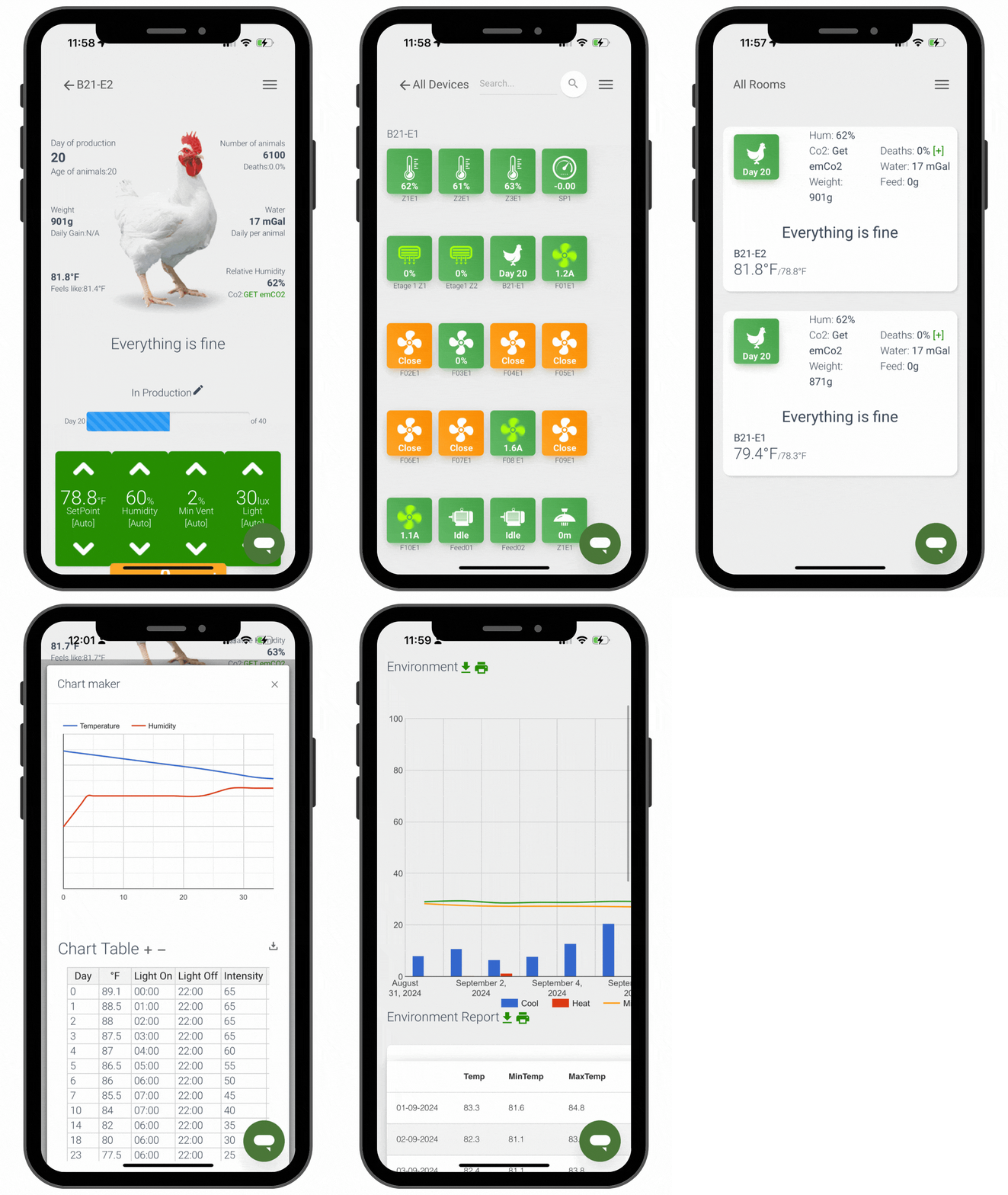
However, complexity shouldn't mean a difficult user experience. That’s the "magic" of AI. It handles the complex math and the 24/7 monitoring so that your job becomes simpler. You shift from being a "ventilation technician" to being a manager who focuses on the health and productivity of the farm.
Conclusion
Your farm controller isn't ChatGPT because it doesn't need to tell you a story or write a poem. It needs to keep your animals healthy and your costs low. It needs to understand the relationship between water intake, outdoor humidity, and heater cycles.
By moving away from reactive "if/then" logic and moving toward a predictive, holistic model, Agrimesh provides a level of precision that was impossible just a few years ago. It's about using technology to get back to the basics of good farming: providing the best possible environment for your livestock, every minute of every day.
If you’re ready to see what predictive AI can do for your operation, contact us today or explore our wiki to learn more about how our sensors and modules work together to optimize your farm.