
When outdoor temperatures plunge to -20°C (-4°F) in the heart of winter, livestock buildings face a critical dilemma. Animals generate significant moisture through respiration and waste, yet opening ventilation systems to evacuate this humidity means losing precious heat. The result is often a choice between two problematic scenarios: maintaining a warm building with excessive humidity levels, or achieving dry air at the cost of drastically increased heating expenses.
This challenge intensifies during extreme cold periods. Traditional ventilation strategies designed for moderate temperatures become inefficient or counterproductive. The solution requires a different approach: minimal ventilation combined with optimized heating and intelligent air circulation.
The Core Problem
Livestock buildings in winter conditions experience high humidity levels primarily from animal respiration and manure decomposition. A single dairy cow can produce 10 to 15 liters of water vapor per day through breathing alone. Multiply this by herd size, add moisture from bedding and waste management systems, and humidity levels can quickly exceed 80% relative humidity.
High humidity creates multiple problems. Condensation forms on cold surfaces, promoting mold growth and structural deterioration. Animals experience increased heat loss and respiratory stress. Disease transmission rates increase. Feed conversion efficiency decreases.
The conventional response involves increasing ventilation rates to remove moisture-laden air and replace it with fresh outdoor air. This strategy works effectively in mild conditions. During extreme cold, however, incoming air at -20°C contains minimal absolute moisture but requires substantial heating to reach acceptable temperatures. Each cubic meter of air exchanged represents a significant energy cost.
Opening ventilation systems wide during extreme cold creates additional complications. Cold air entering the building sinks rapidly, creating drafts at animal level. Temperature stratification becomes pronounced. Heat distribution becomes uneven. Animals in direct draft paths experience cold stress while areas with inadequate air movement remain excessively humid.
The Minimal Ventilation Strategy
Effective dehumidification during extreme cold requires maintaining the minimum ventilation rate necessary to control humidity while compensating for heat loss through adjusted heating systems. This approach focuses on three key elements: reduced air exchange rates, heating compensation, and proper air mixing.
Minimum ventilation rates are calculated based on building volume, animal density, and target humidity levels. For most livestock operations, this typically means ventilation rates 30% to 50% lower than standard winter recommendations. The precise rate depends on outdoor temperature, indoor humidity generation, and building insulation characteristics.
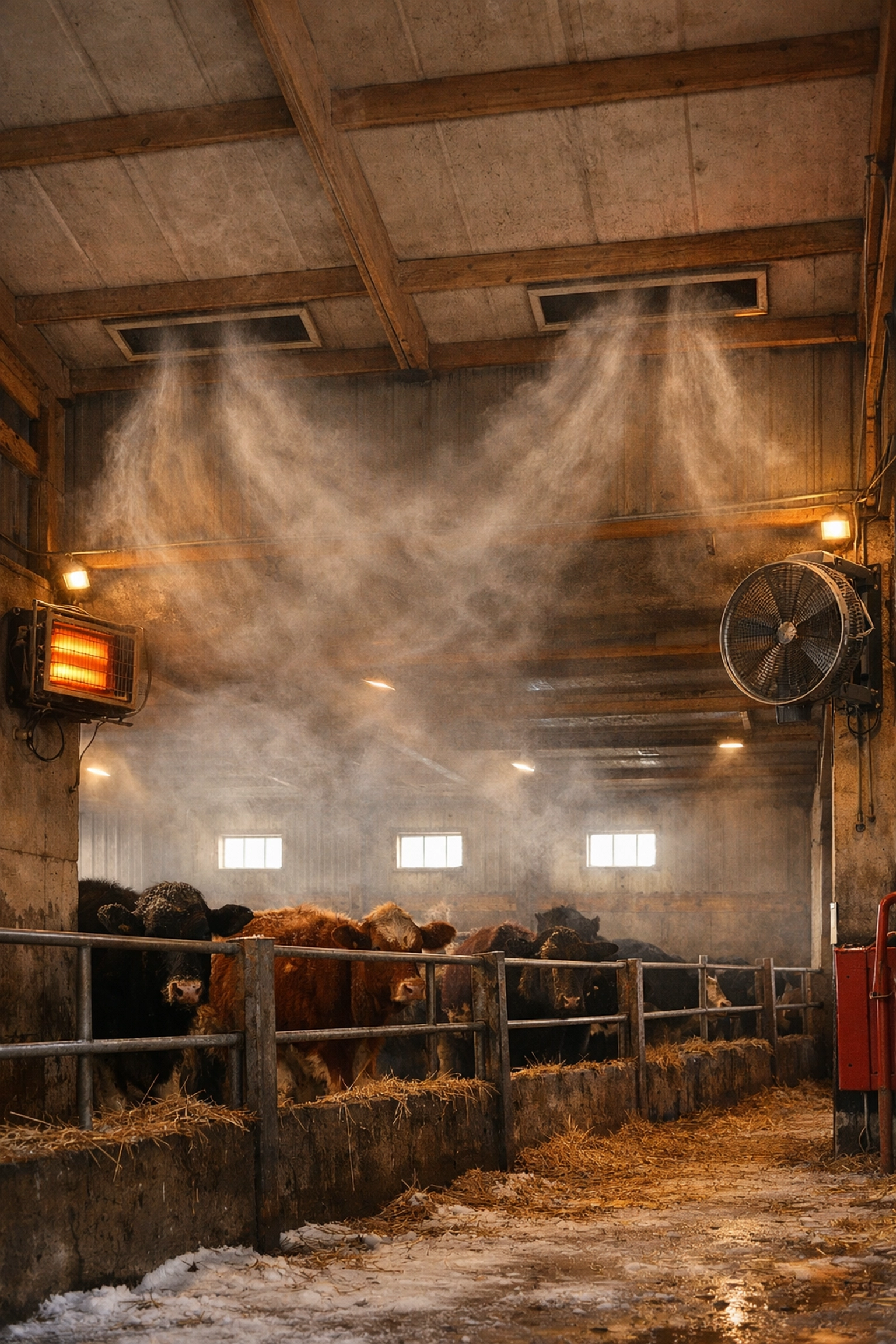
Heating systems must compensate for the reduced temperature of incoming cold air. This requires calculating the heat deficit created by ventilation and adjusting heating output accordingly. Modern heating systems can modulate output precisely to maintain target temperatures while accommodating minimal ventilation requirements.
Air mixing becomes critical when ventilation rates decrease. Incoming cold air must be distributed effectively throughout the building to prevent stratification and drafts. Circulation fans positioned strategically ensure thorough mixing without creating excessive air velocities at animal level. Proper mixing allows minimal ventilation to control humidity throughout the building rather than creating pockets of high humidity in poorly ventilated zones.
Agrimesh AI Optimization
Manual management of minimal ventilation strategies during extreme cold requires constant attention and frequent adjustments. Weather conditions change. Animal heat production varies with feeding patterns and activity levels. Building dynamics shift throughout the day.
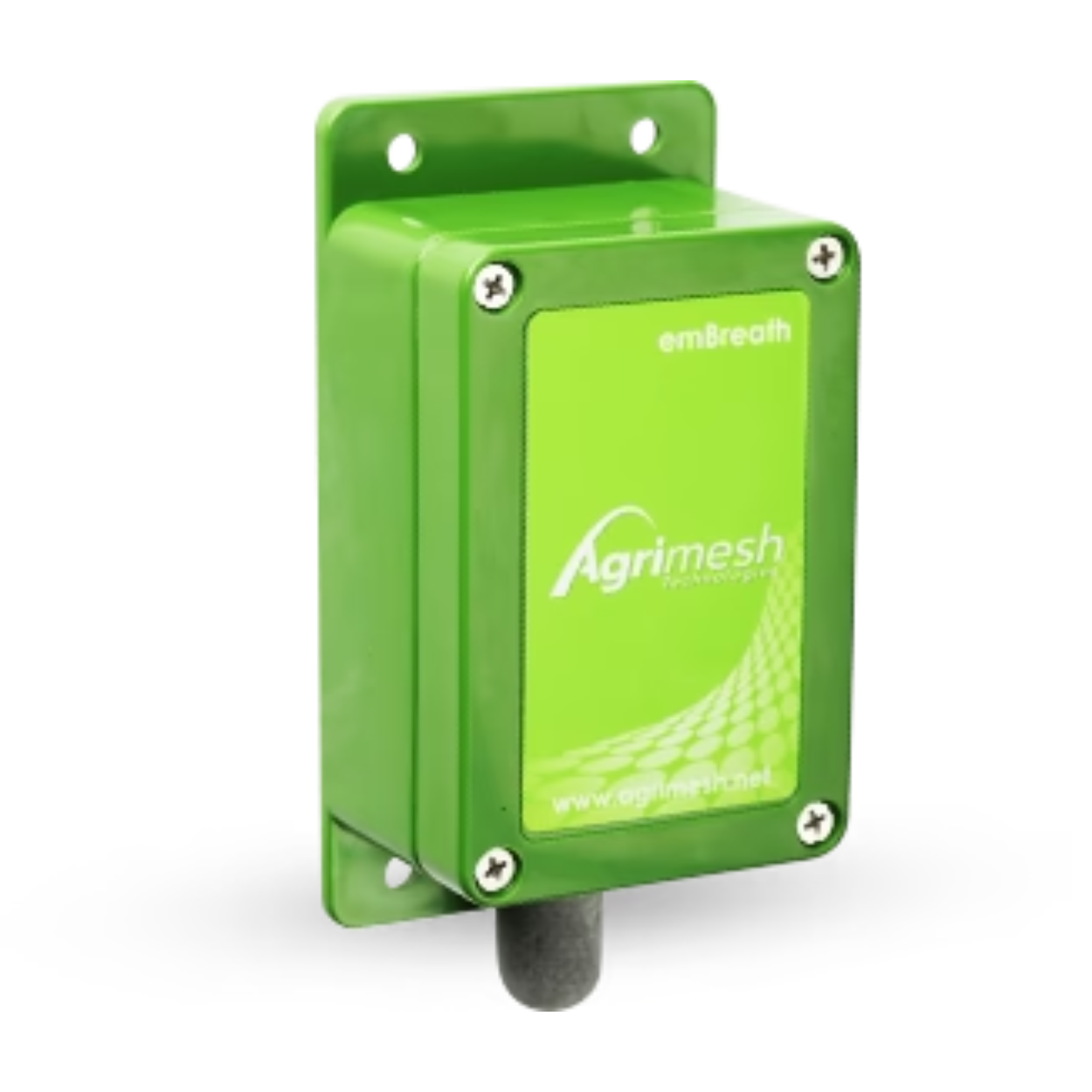
Agrimesh artificial intelligence systems monitor temperature, humidity, and gas concentrations continuously through distributed sensor networks. The emBreath sensors track temperature and humidity levels at multiple locations throughout the building. This multi-point monitoring provides accurate data on environmental conditions and reveals developing problems before they become critical.
The AI system processes sensor data in real-time and adjusts ventilation rates, heating output, and air circulation patterns automatically. When humidity levels begin rising, the system can increase ventilation incrementally while simultaneously adjusting heating to maintain temperature. When outdoor temperatures drop further, ventilation rates decrease while heating increases proportionally.

Predictive capabilities distinguish AI-based systems from conventional controllers. The system analyzes weather forecasts and historical patterns to anticipate changing conditions. When extreme cold weather approaches, ventilation strategies adjust proactively rather than reactively. Heating systems prepare for increased demand. Air circulation patterns optimize for anticipated conditions.
The AI learns building-specific characteristics over time. Each facility responds differently to environmental changes based on insulation levels, animal density, equipment configuration, and management practices. Machine learning algorithms identify patterns and optimize control strategies for specific conditions and objectives. This continuous improvement process increases efficiency and reduces energy consumption progressively.
Equipment coordination ensures all building systems work together effectively. Ventilation fans, heating units, and circulation fans operate in synchronized patterns rather than independent cycles. This coordination eliminates conflicting actions and maximizes efficiency. When ventilation increases, heating adjusts immediately rather than after temperature drops become noticeable.
Practical Results
Operations implementing minimal ventilation strategies with AI optimization during extreme cold periods typically achieve relative humidity levels between 60% and 70% while maintaining stable temperatures. This represents effective moisture control without the excessive energy costs associated with high ventilation rates.
Energy consumption for heating decreases significantly compared to conventional high-ventilation approaches. Reductions of 25% to 40% are common during extreme cold periods. These savings result from reduced heat loss through ventilation while maintaining acceptable environmental conditions.
Animal comfort improves when temperature remains stable and humidity stays controlled. Reduced temperature fluctuations minimize stress. Elimination of drafts at animal level prevents cold spots and uneven conditions. Consistent environmental conditions support better feed conversion, improved growth rates, and enhanced welfare indicators.
Equipment longevity increases when buildings avoid excessive humidity and temperature extremes. Condensation damage decreases. Metal surfaces corrode more slowly. Electrical components experience fewer moisture-related failures. These benefits reduce maintenance costs and extend equipment service life.
The system provides operational flexibility for different scenarios and objectives. During severe cold snaps, priorities shift toward temperature maintenance with moderate humidity levels. As conditions moderate, the system transitions smoothly toward increased ventilation and lower humidity targets. These adjustments occur automatically based on real-time conditions and predetermined management preferences.
Implementation Considerations
Successful minimal ventilation strategies require adequate heating capacity. Buildings must have sufficient heating output to compensate for reduced ventilation air temperature. Undersized heating systems cannot maintain target temperatures when outdoor temperatures reach extreme lows.
Building insulation significantly affects system performance. Well-insulated structures retain heat more effectively and require less heating energy per unit of ventilation. Poor insulation increases heat loss and limits the effectiveness of minimal ventilation approaches.
Air circulation equipment plays a critical role in system effectiveness. Adequate circulation fan capacity ensures proper air mixing throughout the building. Strategic placement of circulation fans prevents dead zones and promotes uniform conditions.
Sensor placement and calibration directly impact control accuracy. Multiple measurement points provide better data than single-location monitoring. Regular calibration ensures sensors remain accurate and system responses stay appropriate.
Conclusion
Dehumidification during extreme cold requires balancing multiple competing factors: moisture removal, temperature maintenance, animal comfort, and energy consumption. Minimal ventilation strategies combined with heating compensation and proper air circulation provide effective solutions when implemented correctly.
Artificial intelligence systems optimize this balance continuously by monitoring conditions, adjusting equipment operation, and learning from building-specific responses. The result is controlled humidity, stable temperatures, and reduced energy costs during the most challenging weather conditions.
For more information about AI-powered environmental control systems, visit Agrimesh's operation page.
